Yi Jin Jing
Introduction
Yi Jin Jing, which translates to "muscle-and-tendon-transforming sutra," is a traditional Chinese qigong exercise renowned for its health and fitness benefits. First popularized through wuxia (martial arts) fiction by the Hong Kong novelist Jin Yong, also known as Louis Cha Leung-Yung, Yi Jin Jing is often associated with the legendary Shaolin monks and their martial prowess. Jin Yong's novels, such as "Smiling Proud Wanderer" and "Demi-Gods and Semi-Devils," have introduced Yi Jin Jing to a broader audience, weaving it into tales of formidable martial arts techniques. These stories have been adapted into numerous TV shows and films since the late 1980s, further cementing its place in popular culture.
Historical and Cultural Context
Yi Jin Jing is traditionally considered one of the most powerful exercises in the Shaolin martial arts repertoire, second only to the Xi Sui Jing (Marrow-Cleansing Sutra). Legend claims that mastery of Yi Jin Jing can transform an ordinary practitioner into a grandmaster, achieving the highest levels of martial ability through nine stages of cultivation. However, these legends, while captivating, are often exaggerated for dramatic effect, as noted in Jin Yong's novels. The actual Yi Jin Jing manuscripts are genuine, though the Xi Sui Jing survives only in fragments.
Practice and Techniques
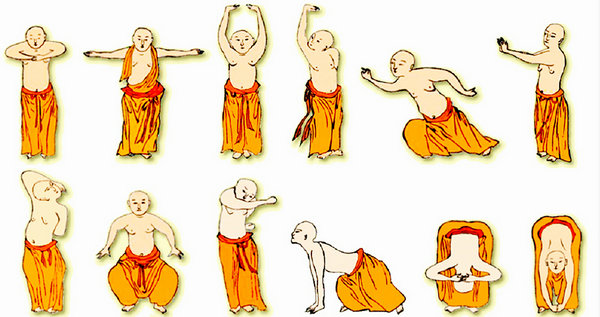
The practice of Yi Jin Jing involves 12 sequences of movement designed to enhance stamina, inner strength, and mental clarity. Although slightly more complex than other exercises like Ba Duan Jin, it does not require much space or time, making it accessible for indoor practice. For general practitioners, the focus is on relaxation and natural breathing, whereas martial artists may use advanced breathing techniques to intensify their training. When practiced correctly, Yi Jin Jing can leave individuals feeling refreshed and invigorated.
Modern Influence and Adaptations
In recent years, Yi Jin Jing has gained widespread popularity, bolstered by cultural and religious institutions such as the Shaolin Temple in Henan province, which actively promotes traditional Buddhist kung fu, including Yi Jin Jing. Various forms of Yi Jin Jing are practiced across China, differing in length, stance, and posture, with more than 60 variations known today. It remains one of the most popular courses offered by numerous health and fitness clubs.
Yi Jin Jing in Zhejiang province
In 2016, Pingqiao, a town in Tiantai county, Zhejiang, was officially recognized as the "Yi Jin Jing Township." Historical records suggest that a Taoist priest named Zong Heng created a Taoist version of Yi Jin Jing during the Ming Dynasty (1368-1644) while residing on Mt. Zining. Today, many locals practice the Zining Yi Jin Jing, performing it for tourists and participating in training courses that bring economic benefits to the region.
International Promotion
The Beijing-based China Health Qigong Association has also created a modified version of Yi Jin Jing to promote the exercise both nationally and internationally, particularly among seniors. Since 2003, the association has published a series of bilingual books on classic Chinese qigong techniques, including Yi Jin Jing, making the practice accessible to a global audience. These resources, along with instructional DVDs, are available in major online bookstores, and enthusiasts often share performances and tutorials on video platforms like YouTube.








